
Knees, hips and getting about
Knees that hurt change what you are willing to do.
Stairs, getting off the floor, a walk that used to be nothing. Knee pain narrows a life quietly, and most people put up with it far longer than they need to before having it looked at.
The knee is often not the whole story
Hips, ankles and the lower back all change how a knee is loaded. Treating the sore joint alone is why relief so often lasts two weeks.
Cold laser is available here
Cold laser therapy is one of the treatments we offer. If your examination suggests it could help your knee, your doctor will explain why and what it involves. More about cold laser.
We are not an alternative to surgery
Some knees need an orthopedic surgeon and we will tell you if we think yours is one. What we can do is look properly first.
What people describe
Pain, and then the avoiding.
What brings people in is rarely the pain on its own — it is what the pain has stopped them doing. That matters clinically as well, because months of favouring one leg changes how everything above it works.
- Pain on stairs, especially coming down
- Stiffness after sitting, or first thing in the morning
- Swelling after ordinary activity
- Crunching, grinding or popping with movement
- A knee that gives way, or that you no longer trust
- Aching that follows you to bed after a normal day
Being told it is arthritis and that nothing can be done is not the same as being told nothing can be done about the pain.
How we work
Look at the whole leg, not just the sore bit.
Dr. Morgan’s standard is plain: we only accept patients for care when we believe we have found the underlying cause, and we only continue care when we are helping.
01
We watch you move
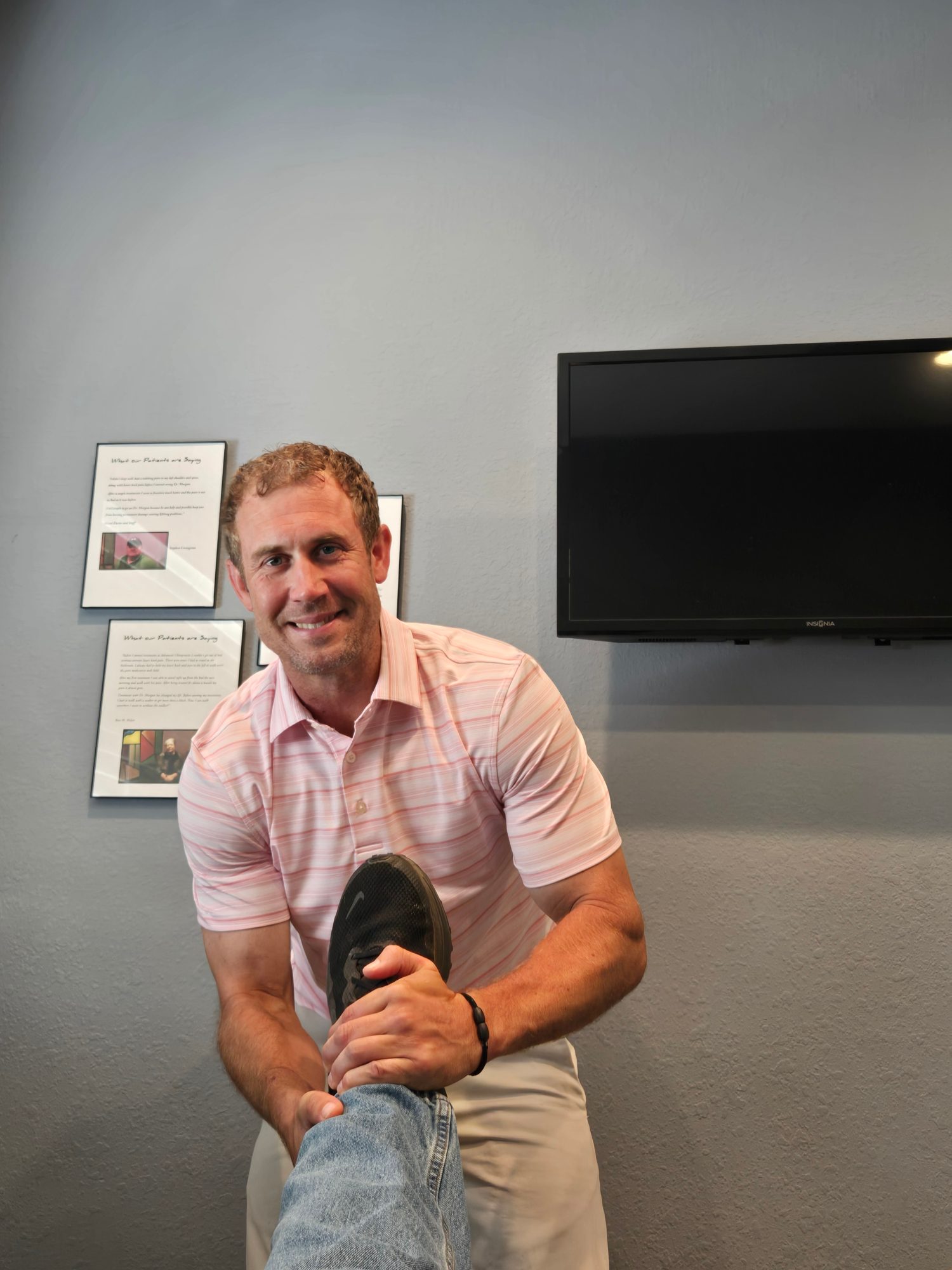
How you walk, stand up, and take a step down. Gait shows things that poking the joint never will.
02
Then we examine and image
The knee itself, plus the hip, ankle and lower back above and below it, with x-rays where they are warranted.
03
You get told what we found
Including whether this looks like something an orthopedic surgeon should see. You get a straight answer, not a course of treatment sold on hope.
04
Care starts, and gets reviewed
Adjustment where it applies, cold laser where it helps, and work on the strength and movement that keeps the joint loaded properly. Progress is measured by what you can do again.
Your first visit
Bring what you have.
- Insurance card and driver’s license
- A list of the medications you take
- Previous medical records
- Previous x-rays, MRI or CT scans
If the knee has a history
These help us most.
- Any previous knee imaging — x-ray, MRI or scan
- Details of past surgery, injections or injuries
- What you have been told about it before, and by whom
- What you have stopped doing because of it
- Shoes you actually wear, if the wear pattern is uneven
If someone has already told you the knee is bone on bone, bring that report. It changes what we look for, and it does not automatically mean we cannot help with the pain.
Patient stories
What changed for them.
“I was suffering excruciating shoulder pain for over a month and could not sleep at night due to pain. I went to see Dr. Morgan and he pinpointed the cause as ‘frozen shoulder’ and recommended a treatment regimen that would help me avoid surgery. By the end of my treatment the pain was completely gone, and nearly all range of motion had been restored.”
T. Anderson
Frozen shoulder — avoided surgery
“Before coming in for treatment, I could not sit, walk or sleep. Now I feel young again. I’m more relaxed when I sleep and walk. I can ride in the car with more distance without hurting. This is the first and only place I will come from now on.”
J.J.
Back pain and mobility
Tell us what the knee has stopped you doing.
Call and describe what hurts and when. We will get you in, look at the whole leg, and tell you plainly what we find.