
After a car wreck
Hurt in a wreck? Get looked at before it settles in.
Neck pain, headaches, stiffness and numbness after a collision often arrive days later, once the adrenaline is gone. We examine, x-ray, explain what we find, and document it properly — for your recovery and for your claim.
We work with auto claims
Our front desk deals with claim numbers, adjusters and records requests routinely. Bring what you have and we will work out the rest.
Come in even if you feel okay
Whiplash symptoms commonly surface two or three days after the wreck. An examination now is worth more than waiting to see what develops.
Working with an attorney?
That is between you and them. If you have one, tell us and we will make sure your records get where they need to go.
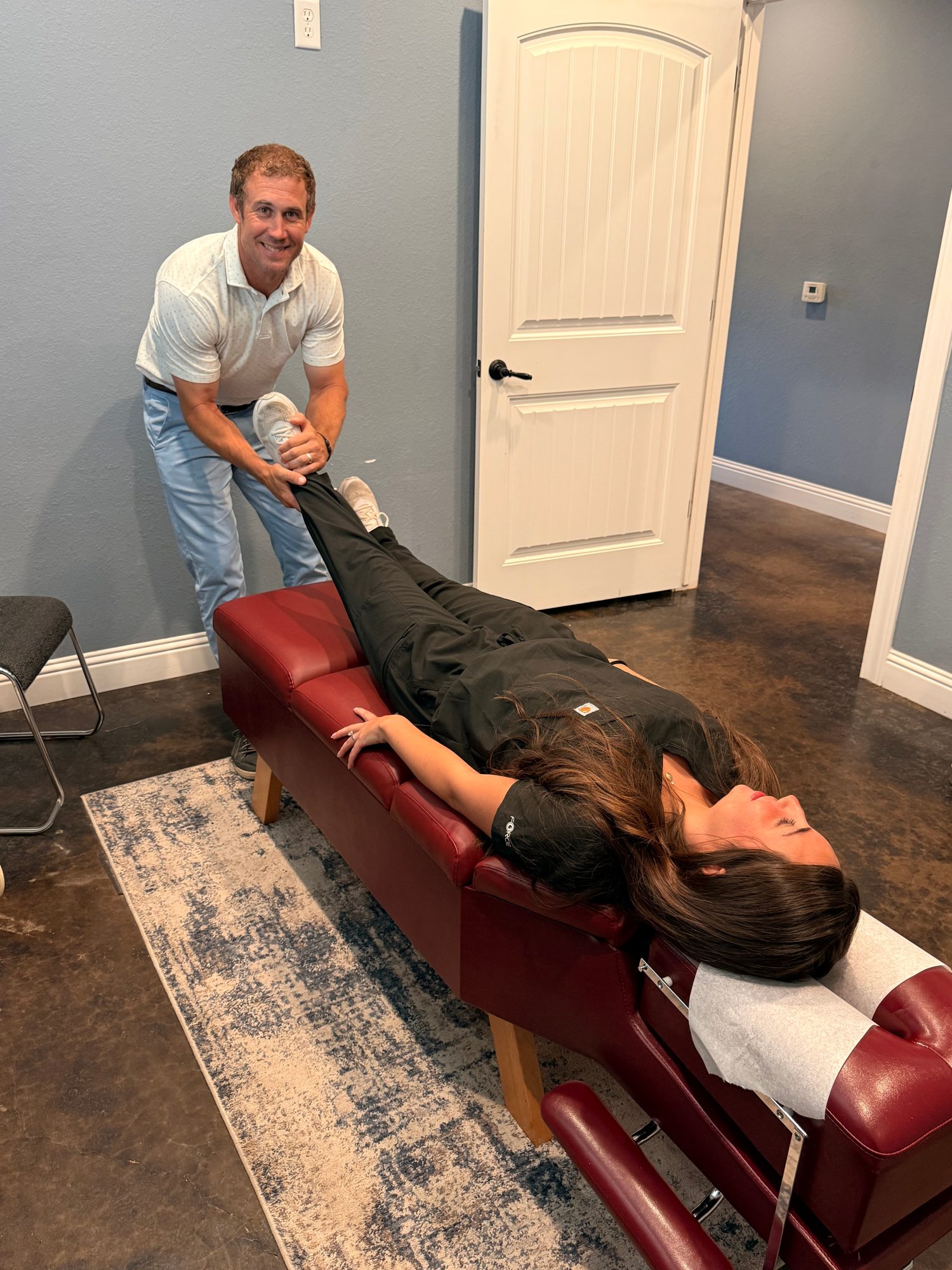
Common after a collision
A wreck lands in the neck first.
A collision throws the head through a range of motion the neck was never built for, in a fraction of a second. The damage is often to soft tissue — which is exactly the kind that does not show up while you are still running on adrenaline.
- Neck pain and stiffness — turning your head to check a blind spot
- Headaches, often starting at the base of the skull
- Numbness or tingling down the arms or into the hands
- Sharp or shooting pain through the shoulders and upper back
- Dizziness
- Muscle soreness that will not let go
- Trouble sleeping, reading, or concentrating
None of this means something is seriously wrong — and none of it means nothing is. That is the point of an examination.
Don’t wait it out
The worst thing you can do is nothing.
Not because something terrible is guaranteed — but because “wait and see” gives you no information, and the window for documenting an injury is not open forever.
01
Symptoms are often late
It is normal to walk away from a wreck feeling shaken but fine, and to wake up two days later unable to turn your head. Feeling okay at the scene tells you very little.
02
An examination gives you a baseline
We check range of motion, reflexes, muscle and joint response, and take x-rays where they are warranted. Whatever we find, you get a clear answer instead of a guess.
03
Documentation is part of the treatment
If there is a claim, what was found and when it was found matters. Records created close to the accident carry weight that records created months later do not.
04
Care starts, and gets reviewed
You get a plan you understand, and it changes as you respond to it. If you are not improving, that is information too.
Your first visit
Bring what you have.
- Insurance card and driver’s license
- A list of the medications you take
- Previous medical records
- Previous x-rays or MRIs
After an accident
Also bring, if you have it.
- Claim number
- Insurance company details
- The accident report
- Your adjuster’s name and phone number
- Contact details for your attorney
- Any emergency room records from the accident
Missing half of it? Come anyway. Our staff handles this paperwork every week and can chase most of it down. Not having your claim number is not a reason to sit at home hurting.
Patient stories
After the wreck.
“I could hardly bend, walk fast, pick up heavy stuff, work or do heavy duty cleaning because it hurt really bad. I was in a lot of discomfort after my wreck. I feel like literally everything has been shifted back into place. I feel better than I did when I first started coming in.”
T. Howard
Auto accident recovery
“I was in a car wreck. Once I started treatment I started to feel better. Dr. Morgan explained everything he did and everything that will help with my pain. The staff are very friendly and they are helpful — if you have questions they will help with whatever you need. I am able to return to my daily activities and still manage my pain.”
Debraleigh Gonzalez
Auto accident recovery
Call us before it becomes a years-long problem.
Tell us you were in a wreck and roughly when. We will get you in, take a proper look, and tell you plainly what we find.