
Disc problems
A disc on a scan is not a life sentence.
Bulges and herniations show up on imaging in plenty of people with no pain at all. What matters is whether yours is pressing on something, and what can be done about the pressure.
The scan is not the diagnosis
A report describing a bulge tells you what the disc looks like. It does not tell you whether that is what hurts. The examination connects the two, or does not.
Most discs do not need surgery
A great many settle with conservative care and time. Surgery is a real option for some people and a first resort for very few.
Some symptoms need the emergency room, not us
Loss of bladder or bowel control, numbness around the groin, or rapidly worsening weakness in both legs is an emergency. Go straight to hospital.
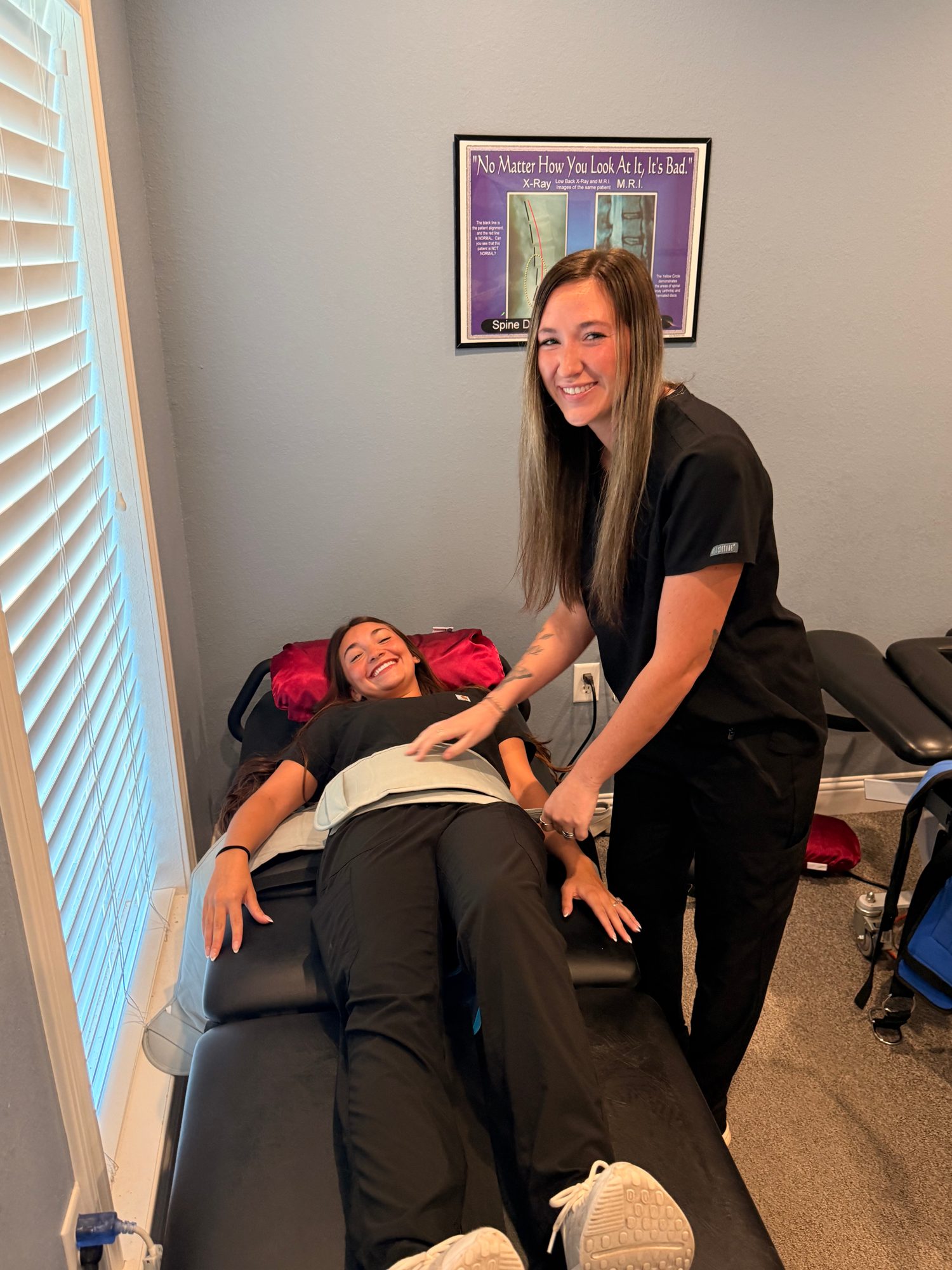
What people describe
The disc presses, and the nerve reports it elsewhere.
Discs sit between the vertebrae and take load all day. When one bulges into the space a nerve root occupies, the symptoms usually appear along that nerve rather than at the disc itself — which is why the back can ache modestly while the leg is unbearable.
- Pain running into one leg or arm, often past the knee or elbow
- Numbness or tingling in a defined strip or in particular toes or fingers
- Pain worse when sitting, coughing or sneezing
- Muscle spasm locking the back up
- Weakness in a foot, ankle or grip
- Relief from lying down, and misery from staying still too long
A disc problem is common, treatable and worth examining properly. It is not, on its own, a reason to expect surgery.
How we work
Establish whether the disc is the cause.
Dr. Morgan’s standard is plain: we only accept patients for care when we believe we have found the underlying cause, and we only continue care when we are helping.
01
We check what the nerve is doing
Reflexes, strength and sensation along the nerve in question. This is what separates a disc that is causing symptoms from one that merely appears on a scan.
02
Then we examine and image
Movement, posture and load tolerance, with digital x-rays on site where they are warranted. If an MRI is what is needed, we will say so.
03
You get told what we found
Plainly, with the images in front of you, including whether referral is the right next step. We would rather send you on than treat something we cannot help.
04
Care starts, and gets reviewed
Care aimed at taking load off the disc and settling the nerve, adjusted as you respond. If your symptoms are not improving, that changes the plan.
Your first visit
Bring what you have.
- Insurance card and driver’s license
- A list of the medications you take
- Previous medical records
- Previous x-rays, MRI or CT scans
If a scan has already been done
These help us most.
- The MRI, CT or x-ray report — and the images if you have them
- What you were told about it, and by whom
- Whether surgery has been raised, and what was said
- Which leg or arm the symptoms run into
- What positions make it better and worse
People often arrive apologizing for a scan that is a few years old. Bring it anyway. Old imaging still tells us how your spine is built.
Patient stories
What changed for them.
“Before coming in for treatment, I could not sit, walk or sleep. Now I feel young again. I’m more relaxed when I sleep and walk. I can ride in the car with more distance without hurting. This is the first and only place I will come from now on.”
J.J.
Back pain and mobility
“I’ve been a patient now for about a month. The office staff are very friendly and I am beginning to feel like I am going to be able to mend my lower back. Kendra has put a great game plan together for me and I am happy to finally have some relief. Sabrina is so nice at the front desk as well. Great experience so far!”
Lee Ann Hammit
Lower back
Bring the scan and let us look properly.
Call and tell us what the report said and where the symptoms run. We will get you in, examine you, and tell you honestly what we think.